Showing posts with label GPS. Show all posts

Friday, October 11, 2013

Get Lost

     Over the years I've made many changes to how I do things. A lot of time wearing out boot leather is a great way to get first hand experience that opens ones eyes, and gives inspiration to try other methods and things. Sometimes the simple suggestions buried in the pages of an outdoors magazine strike that nerve, and add up to a progressive change. Whatever it is, if we're still doing it, it must have worked.

     One thing I remember reading several times over the years was that the majority of sportsmen seldom travel more than 1/4 mile into the woods from the road. Seems natural actually; travelling in the woods is harder than on a sidewalk or road leading people to think they're deeper in than they probably thought. Coupled with the practical mind thinking about the effort it takes to drag a deer out, how the effort compounds in the dark, and the ingrained desire to not get lost, it's easy to see why the darkest corners of the forest seldom see sports. Not getting lost, and what to do if (when) you get lost has become an industry here, too. Television shows highlighting survival tips are on almost daily, and the celebrity like status of the hosts has them hocking their wares must have survival knives, at every camping outlet. The electronics world has changed the landscape more than anything. One can venture afield knowing exactly where they are, with a device that not only tells them where to go, but also whose land they are crossing, the terrain ahead, and the moon phase. Soon, I expect there will be a GPS with a stock ticker connected to online trading.


     But don't mistake this as a GPS rant, it's not. I very much like GPS, and use one almost every time I'm in the woods. I use my GPS so frequently that I've got a battery recharger, and several pair of spares ready to go, changing out every morning. Sure, I wish I was more of a natural outdoors man, with a mind for remembering the features of the land, and an internal compass. I don't, so GPS has become my friend, and has led me to a change in how I do things.


     What is it I do differently, that I didn't do before? Well, after years of not trying to get lost in the woods, I now just just head into the woods, and essentially get lost. Of course I'm not getting lost in the sense of not knowing how to get out, but in the sense that I just go where the cover leads me. Heading in I have no idea where I'll be when I decide to return, so I've no idea how to get back. Marking my starting position on my GPS allows me that freedom, and gives me a heading back to that point when the time comes. This practice routinely puts me a mile or more from my starting point, and I seldom see another sport when I'm in that deep. This tactic, should the cover be right, also puts me into game that doesn't get disturbed by sport or dog as often. While I use my GPS most often for grouse hunting, it has been useful on the few occasions when I've attempted to track deer in the snow. The wood lot where I deer hunt is pretty small, so its never a long walk out, but knowing exactly where I was allowed me to get to one of the trails in our network, and get out more easily.

     There are a couple of preparations to be made before venturing forth this way. The first is mental; you can't be scared to just go, trusting your GPS to get you out. This is probably the most difficult hurdle to over come, but a little practice with your GPS in familiar surroundings will help you establish trust in the machine. The second is to make sure you have a back up method of navigation should your GPS malfunction, or you leave it on the roof of your car (like I did) after setting it down to put on your gloves. Knowing what direction you are headed when you leave the road, and the general heading of the road will provide you with a direction to head (in the most general sense) to get out of the woods.

     Whatever species of game you hunt, getting away from the crowd will benefit you. Now, go get lost.


Wednesday, November 9, 2011

Things You Should Check Out; Safety & Navigation Recommendations

This installment of Things You Should Check Out covers a few items I use, and recommend for safety and navigation. Naturally navigation goes hand in hand with safety. After all, not getting home at the end of the hunt is fundamentally unsafe.

The Delorme Gazetteer is a great item to add to your gear bag. Deform makes a topo atlas of all 50 states, showing a variety of features you're bound to find useful. My collection of Delorme are worn, chewed by puppies, stained with gun solvent, and well marked with highlighter pen. While too big to be carried afield they can be studied before heading out for an adventure.

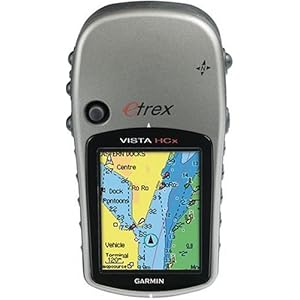
A GPS is another item that will allow one to safely venture into parts unknown, and back again. There are quite a few companies making GPSs, and many different kinds available. I use a Garmin eTrex Vista HCx. This model has downloadable topo maps, so not only can you see where you are, but what lays ahead. Any waypoint, or track you save in the device can be saved on your computer, so maps can be made, or over-layed on Google Earth. The GPS has allowed me to find and hunt cover I would have never been in. The Garmin etrex


The last thing I'll recommend is the shooting glasses being offered by Ducks Unlimited. These glasses come with a case and five different shooting lenses. The set includes two low light lenses in yellow, and orange, a bronze lens for bright days, a blue lens for clay shooting, and a clear lens. In addition to the obvious benefits of glasses when shooting, they also have a navigational benefit. Should you ever find yourself pressed into navigating the woods after dark (not recommended) you can put on the clear lens, and protect yourself from the twig, or branch that will try to poke your eye out. DU Shooting glasses

Thursday, March 10, 2011

The Things We Carry, Outdoor Safety

     For all the enjoyment I get from my time in the outdoors, the satisfaction of bringing home a bounty to cook and serve to my family and friends is unparalleled. Good shooting, excellent dog work, snappy retrieves, spectacular misses, and the beautiful scenery are the memories that season a hard earned meal, and sharing these memories, and a hunting tale or two at the table complete the experience. It's also among the many reasons to get home safely; Something I think too many sportsmen take lightly, as I have in the past.  Maybe because I'm getting older, and don't bounce off the ground like I used to, or perhaps it's the result of a close call, but I think about preparedness, and safety more than I ever did in the past. Whatever the reason, a bit of emergency preparation is something we should all think about. To steal a bit of wisdom from the pro-gun advocates; better to have a plan and not need it, than need a plan and not have it.

     So,...What exactly is "the Plan"? Well, I don't believe there is any one size fits all plan, as we all experience our outdoors is a variety of ways. I have taken bits popular safety convention, and put together what I feel works best for me. Here's what I've done, why, and some of the draw backs to my plan.

     The first thing I did was to put together a small survival kit. My kit is nothing extravagant; two small survival blankets, two ways to start a fire, a lighter, and a magnesium starter, an extra knife, a small spool of parachute cord, and a snack which I rotate to keep fresh. Why this collection? I figure, should I need to use it, staying warm and dry will be the two things I'd want the most to accomplish. One safety blanket can serve as a rudimentary shelter, aided by the parachute cord, the second blanket will undoubtedly end up wrapped around me. With two ways to start a fire, I'm pretty confident I'll get one started, provided I'm not subject to a downpour or blizzard like conditions. When I get hungry, the snack gets sacrificed, which I'm sure will be good news for the dog. As most of my hunting involves a dog, and a gun I don't feel the need to worry about dangerous wildlife very much. I try to always carry this kit with me, even when I'm not going far. I reason, if I should turn an ankle I may not be able to get myself out of the woods, but I will probably have enough mobility to collect a bit of wood for a fire, and get myself someplace dry while waiting for help.

     Another thing I've taken to doing is letting someone know where I'll be. A couple years ago, while duck hunting alone in early November, I capsized my canoe. Common sense had me wearing a life vest, and I'd tucked an extra paddle under the seat, but I hadn't secured my gun. Fortune shined on me that day. The autumn had been relatively warm, and the water wasn't numbingly cold, so I was able to swim, dragging the canoe behind me to a beaver lodge which I climbed up to drain the canoe. After I collecting my flotsam and jetsam, while paddling back to my car in the dark I realized that not only had I ruined my cell phone, which I'd figured I could use if I had any trouble, but also that I hadn't told anyone where I was going. Neither my friends, nor my wife was aware that I'd decided to go duck hunting. Bad move. I now try to let someone know where I'll be, and when to expect me back. In fact, when I go duck hunting in the canoe now, I not only tell my wife where I'll be, but set up a check in time with her. If I don't call by a certain time, she's to alert the local PD. Sometimes I'm unable to inform anyone of where I'll be as I often hunt way up north where cell phone signals don't exist. Also, I'm seldom in one place the whole time, as I move from one spot to the next, so this system isn't fool proof, but I use it when I can.

     The last principle I have been adhering to is not getting lost in the first place. I've bought a GPS, and have learned the basic functions and use. The GPS I use is the type that shows a topo map on the display screen. I've found this to be useful when navigating the woods, and though I haven't been lost in the woods yet, I have confidently navigated into, and back out of some big woods areas, rather easily because I could relate my travel direction to the land features. The GPS has it's drawback, however. Batteries can run out, which is why I carry a couple extra with me, as well as keeping rechargeables plugged in and ready to go at camp. I switch the batteries whenever I reach or near the 50% level. Another drawback is the human factor. Yes, I've forgotten to mark my starting location before, and once, after marking the car's location I headed into the woods leaving the GPS on the roof of the car. Good thing I had an idea of which direction the road ran, and had a compass with me. Which leads to one last point; a GPS is no excuse to leave your compass at home.

     These three provisions are just a small sampling of ways to be safe and accounted for, and while they may be what I think will work for me, they may not work for everyone. As I've shown, they aren't fool proof, but they're better than nothing. We give our recipes a lot of thought, so why not give a little consideration to getting these gifts from the outdoors to the table, whatever it may take.